British Life and Culture by Mandy Barrow
Hello everyone! Have you ever wondered how we keep track of time, seasons, and special events throughout the year? We use a calendar! A calendar is like a special map for time, helping us organise our lives, from school holidays to national celebrations.
In Britain, like many other countries, we follow the Gregorian calendar. This calendar divides our year into 12 months, starting with January and ending with December. Each month has a different number of days, usually 30 or 31, except for February, which has 28 days (or 29 in a leap year!). Understanding our calendar helps us appreciate the rhythm of British life, from the cold, dark days of winter to the bright, long days of summer.
January is the very first month of our year, and it feels like a fresh start for everyone! It’s named after Janus, an ancient Roman god of beginnings and transitions. In Britain, January is typically one of the coldest months. You might see frosty mornings, bare trees, and sometimes even a blanket of snow, especially in northern parts of the country or on higher ground.
The biggest event in January is, of course, New Year’s Day on the 1st. Many people celebrate the night before, on New Year’s Eve, with parties, fireworks, and a countdown to midnight. When the clock strikes twelve, people often sing “Auld Lang Syne,” a traditional Scottish song about old times and friendship. It’s a time for making “New Year’s Resolutions,” which are promises people make to themselves to do better or try new things in the coming year, like eating healthier or reading more books.
Another important date in January is Burns Night on the 25th. This is a special celebration in Scotland, and by Scots all over the world, to honour the famous Scottish poet Robert Burns. People enjoy traditional Scottish food, like haggis, and recite Burns’ poems.
December is the twelfth and final month of our year, and it’s often the most festive! It’s named from the Latin word ‘decem’, meaning ten, because it used to be the tenth month in an older Roman calendar. December in Britain is usually cold, and the days are the shortest of the year. The winter solstice, the shortest day, usually falls around the 21st of December.
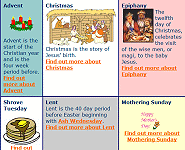
The month is dominated by Christmas celebrations. The period leading up to Christmas is called Advent, and many children have Advent calendars to count down the days, opening a little window each day to find a picture or a chocolate. Homes are decorated with Christmas trees, lights, and holly, and people sing Christmas carols.
Christmas Day on the 25th of December is a major public holiday. Families gather to exchange presents, enjoy a special Christmas dinner (often roast turkey with all the trimmings, followed by Christmas pudding), and spend time together. The next day, the 26th, is Boxing Day, another public holiday. Traditionally, this was a day when servants or tradespeople received a ‘Christmas box’ from their employers, but today it’s often a day for relaxing, visiting friends, or going to the sales.
December ends with New Year’s Eve on the 31st, a night of celebrations that lead us right back into January, ready to start the calendar cycle all over again!
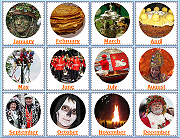
Here is a quick look at all the months in the British calendar year, along with some key events or characteristics:
| Month | Key British Fact or Event |
|---|---|
| January | New Year’s Day, cold weather, Burns Night (Scotland) |
| February | Valentine’s Day, Pancake Day (Shrove Tuesday), shortest month |
| March | St. David’s Day (Wales), Mother’s Day, Spring Equinox |
| April | April Fool’s Day, Easter (often in April), St. George’s Day (England) |
| May | May Day, Bank Holidays, warmer weather begins |
| June | Summer Solstice (longest day), Father’s Day, Trooping the Colour |
| July | School summer holidays begin, Wimbledon Tennis Championships |
| August | Summer Bank Holiday, many festivals and outdoor events |
| September | Children go back to school, Autumn Equinox |
| October | Halloween, conker season, preparing for Bonfire Night |
| November | Bonfire Night (Guy Fawkes Day), Remembrance Day, colder weather |
| December | Christmas, Boxing Day, New Year’s Eve, shortest days |
From the excitement of New Year’s Day in January to the festive cheer of Christmas in December, each month brings its own unique flavour to life in Britain. It’s wonderful to see how the calendar helps us celebrate our traditions and look forward to what’s next!
Author: Mandy Barrow
|
Special Days in December
|
||||||||||||||||||||||||||||||||||||||||
Learn about Christmas in England from the children who live in Britain Christmas traditions why do what we do at chrsitmas time
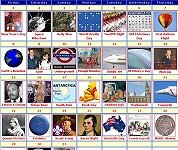
Information about my calendars
"I am and American citizen and astounded by your wonderful website! It is not only informative but kept so up to date that I constantly refer to it, especially the calendar. The pupils of your school are indeed lucky and the site reflects the dedication and enthusiasm of the staff and students. I hope the site continues for many years." Charles, USA, Atlanta "I was searching the web yesterday for a website that would give me a calendar of significant days and weeks throughout the year. I was really struggling until I came across your website and was instantly blown away. I know you have already received lots of praise for your efforts but your site is the most impressive schools website I have seen. Often the amount of time and effort put into creating such a resource is not matched by its usefulness. Your calendars in particular are second to none. Thank you and well done." David, Deputy Headteacher "EXCELLENT information of the customs and traditions of Great Britain........some of which are in danger of being lost or forgotten forever. THANKS for such an interesting site! " Karen "As a childminder I like to celebrate festivals and awareness days with the little ones. This was the best and most comprehensive list I found on the net." "Information about awareness days and special dates to help me plan my youth work programme." "I am British but now living in the US. I needed to know when Mothers' Day is in the UK. (In the USA it is always in May. In 2007 it is on May 13 this year. I didn't want my mother to think I had forgotten her - in March! Now she'll get two cards - one in March and one in May but she deserves to be applauded twice!" "Thank you for all the information i have found relating to feasts and festivals as a teacher it has given me an insite to the history i needed to teach to primary children" Julie, Northampton England "This is a fantastic website. I am a headteacher planning this terms assemblies and came accross your site through REonline. It is full of useful well presented information. I can use a lot of it in my assemblies and I will be recommending that my staff use it with children. We are an infant school but the way you present the information is so accessible that I feel we could use it. Thank you."
© Copyright 2013
is the creator of the Woodlands Resources section of the Woodlands Junior website. left Woodlands in 2003 to work in Kent schools as an ICT Consulatant. Woodlands Junior Homework Help new website |

customs traditions britain, scotland customs and traditions, traditional british christmas dinner, christmas customs traditions, christmas traditions, british culture customs traditions, british christmas customs, british christmas carols, british christmas crackers, british christmas pudding,british christmas trees, british christmas dinner, british celebrate christmas, british royal family, chrsitmas traditions, christmas customs, england, wales, scotland, Christmas Celebrations, british traditions, british customs, british culture, December, Christmas, food, christmas dinner, mince pies, advent, christmas eve, christmas day, boxing day, 12 days of christmas, new year, christmas pudding, christmas cake, christmas carols, christmas cards, christmas stocking, pantomime, santa claus, st nicholas, christmas presents, christmas crackers, christmas trees, mistletoe, holly, ivy