British Life and Culture by Mandy Barrow
Welcome to our page all about schools and learning in the UK! Education is super important for everyone. It helps you learn new things, make friends, and prepare for your future.
In the United Kingdom, children usually start school around the age of four or five. They continue their education until they are at least 16 years old, and many choose to study for much longer!
In England, Wales, and Scotland, children must be in full-time education from the age of 5. In Northern Ireland, it’s from age 4. This is called ‘compulsory education’ because it’s a rule that children must attend.
Most children go to school, but some are taught at home by their parents. This is called ‘home schooling’ and it is also a popular choice for some families.
The journey through school in England is usually split into different stages. These stages help make sure children learn things appropriate for their age and build on what they have already learned.
Before primary school, many children go to nurseries or pre-schools. At age 4, most children start Reception class at a primary school. This stage focuses on playing, learning social skills, and early reading and maths.
Primary school is for children from ages 5 to 11. Here, you learn lots of different subjects like English, Maths, Science, History, Geography, Art, Music, and Physical Education (P.E.).
Children usually stay with the same teacher for most subjects in a year. Towards the end of primary school, at age 10 or 11, children take national tests called SATs to check their progress in core subjects.
After primary school, children move to secondary school, usually at age 11. This is a big change! You will have different teachers for different subjects, and often move between classrooms.
At secondary school, you explore subjects in more detail and also get to choose some subjects you are most interested in. When you are 15 or 16, you take important exams called GCSEs (General Certificate of Secondary Education).
Historical Fact: Before 1972, many children took an “11-plus” exam to decide if they would go to a grammar school (more academic) or a secondary modern school. This system has mostly been replaced in England, though some grammar schools still exist.
After GCSEs, many students choose to stay at school (in a ‘sixth form’) or go to a college. This is called Further Education. Here, they can study for A-Levels (Advanced Levels) or vocational qualifications like BTECs.
A-Levels are usually needed to go to university. Vocational courses teach you practical skills for specific jobs, like hairdressing, construction, or engineering.
If you want to continue learning after Further Education, you can go to university. This is called Higher Education. Universities offer degree courses, which usually last three or four years.
The UK has many famous universities, like Oxford and Cambridge, which have been teaching students for hundreds of years! You can learn about almost any subject you can imagine at university, from Ancient History to Space Science.
The school year in England usually starts in early September and finishes in July. It is divided into three ‘terms’: Autumn Term, Spring Term, and Summer Term.
There are holidays between terms and also a ‘half-term’ break in the middle of each term. The longest holiday is the summer holiday, which lasts about six weeks and is a great time for trips and relaxation.
Here’s a quick look at the terms:
| Term | Approximate Dates | Half-Term Break |
|---|---|---|
| Autumn Term | September to December | One week in October |
| Spring Term | January to March/April | One week in February |
| Summer Term | April to July | One week in May/June |
There are two main types of schools in the UK: state schools and independent schools.
State Schools: Most children in the UK go to state schools. These schools are funded by the government, so parents do not have to pay fees for their children to attend. They must follow the National Curriculum (in England).
Independent Schools (or Private Schools): These schools are funded by fees paid by parents. They do not have to follow the National Curriculum and can set their own rules and curriculum. Some independent schools are ‘boarding schools’, where students live at the school during term time.
Interesting Fact: Some of the oldest schools in the world are in the UK, like The King’s School, Canterbury, which was founded in 597 AD! You can read more about it on our British History Timeline page.
In England, most state schools follow the National Curriculum. This sets out the subjects that must be taught and what children should learn in each subject at different ages, called ‘Key Stages’.
Core subjects include English, Maths, and Science. Other important subjects are History, Geography, Art and Design, Music, Physical Education (P.E.), Computing, and Modern Foreign Languages (often French or Spanish).
You can learn more about some of these subjects on our History or Geography pages.
While this page mainly talks about England, it’s important to remember that the UK is made up of four countries: England, Scotland, Wales, and Northern Ireland.
Each of these countries has its own government and slightly different education system. For example, in Scotland, children take ‘National Qualifications’ instead of GCSEs and A-Levels, and the school year can be a little different.
However, the main goal is the same across the whole UK: to give every child a great education and the best start in life!
by Mandy Barrow
|
Special Days in December
|
||||||||||||||||||||||||||||||||||||||||
Learn about Christmas in England from the children who live in Britain Christmas traditions why do what we do at chrsitmas time
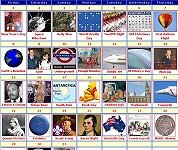
Information about my calendars
"I am and American citizen and astounded by your wonderful website! It is not only informative but kept so up to date that I constantly refer to it, especially the calendar. The pupils of your school are indeed lucky and the site reflects the dedication and enthusiasm of the staff and students. I hope the site continues for many years." Charles, USA, Atlanta "I was searching the web yesterday for a website that would give me a calendar of significant days and weeks throughout the year. I was really struggling until I came across your website and was instantly blown away. I know you have already received lots of praise for your efforts but your site is the most impressive schools website I have seen. Often the amount of time and effort put into creating such a resource is not matched by its usefulness. Your calendars in particular are second to none. Thank you and well done." David, Deputy Headteacher "EXCELLENT information of the customs and traditions of Great Britain........some of which are in danger of being lost or forgotten forever. THANKS for such an interesting site! " Karen "As a childminder I like to celebrate festivals and awareness days with the little ones. This was the best and most comprehensive list I found on the net." "Information about awareness days and special dates to help me plan my youth work programme." "I am British but now living in the US. I needed to know when Mothers' Day is in the UK. (In the USA it is always in May. In 2007 it is on May 13 this year. I didn't want my mother to think I had forgotten her - in March! Now she'll get two cards - one in March and one in May but she deserves to be applauded twice!" "Thank you for all the information i have found relating to feasts and festivals as a teacher it has given me an insite to the history i needed to teach to primary children" Julie, Northampton England "This is a fantastic website. I am a headteacher planning this terms assemblies and came accross your site through REonline. It is full of useful well presented information. I can use a lot of it in my assemblies and I will be recommending that my staff use it with children. We are an infant school but the way you present the information is so accessible that I feel we could use it. Thank you."
© Copyright 2013
is the creator of the Woodlands Resources section of the Woodlands Junior website. left Woodlands in 2003 to work in Kent schools as an ICT Consulatant. Woodlands Junior Homework Help new website |

customs traditions britain, scotland customs and traditions, traditional british christmas dinner, christmas customs traditions, christmas traditions, british culture customs traditions, british christmas customs, british christmas carols, british christmas crackers, british christmas pudding,british christmas trees, british christmas dinner, british celebrate christmas, british royal family, chrsitmas traditions, christmas customs, england, wales, scotland, Christmas Celebrations, british traditions, british customs, british culture, December, Christmas, food, christmas dinner, mince pies, advent, christmas eve, christmas day, boxing day, 12 days of christmas, new year, christmas pudding, christmas cake, christmas carols, christmas cards, christmas stocking, pantomime, santa claus, st nicholas, christmas presents, christmas crackers, christmas trees, mistletoe, holly, ivy