British Life and Culture by Mandy Barrow
Have you ever seen a mysterious face peeking out from amongst leaves and branches? This ancient figure is known as the Green Man! He is a very old and fascinating part of British culture and history. The Green Man is usually shown as a human face, often male, made entirely out of leaves, vines, and sometimes flowers or fruit. Sometimes the leaves sprout directly from his mouth, nose, or eyes, making him look like he is literally growing from the plant world.
He is not a scary monster, but rather a powerful symbol of nature itself. He represents the spirit of the wild, the cycle of growth, death, and rebirth that we see all around us in plants and trees. He reminds us of the power, beauty, and mystery of the natural world.
One of the most exciting things about the Green Man is trying to spot him! He can be found in many unexpected places, especially in older buildings across Britain. You might see him carved in stone on the walls of ancient churches and cathedrals, peeking down from wooden beams in old pubs, or even hidden amongst the decorations of grand houses. Because he is often carved in stone or wood, he is sometimes tricky to spot, blending in with the surrounding patterns.
It might seem strange to find a nature spirit inside a church, but the Green Man was so popular and well-loved that he was often included in the carvings even after Christianity became the main religion in Britain. He represents the ancient connection people had with the land and its seasons, a connection that continued even as new beliefs arrived.
He is also a common sight in gardens, parks, and more modern artworks. People still love to include him as a reminder of nature’s power and our connection to the environment.
The Green Man is a powerful symbol with many meanings. Here are some of the main ideas he represents:
The origins of the Green Man are very ancient, stretching back long before recorded history. Similar leafy faces have been found in different cultures around the world, suggesting that humans have always felt a deep connection to the spirit of nature.
In Britain, he is thought to come from pagan beliefs, which were common before Christianity arrived. These beliefs often involved worshipping nature and celebrating the turning of the seasons. The Green Man might have been a god of the forest, or a symbol of the yearly cycle of death and rebirth in nature, especially in spring.
Even after Christianity became widespread, the Green Man didn’t disappear. Instead, he was often incorporated into Christian art and architecture. Perhaps he was seen as a way to connect the old beliefs with the new, or simply as a beautiful and meaningful decoration that people understood. He survived because he was so important to people’s understanding of the world around them and the changing seasons.
Another related figure you might hear about is “Jack-in-the-Green.” This is a folk custom, often seen during May Day celebrations in Britain, where a person is covered in a leafy framework. This tradition is also linked to celebrating spring and the arrival of summer, bringing the spirit of the Green Man to life in parades and festivals.
The Green Man can be found in many different places, often in old buildings. Here are some common locations and where to look:
| Location Type | Where to Look | Material Often Used |
|---|---|---|
| Churches & Cathedrals | Stone carvings on pillars, arches, fonts, corbels; wooden bosses on ceilings. | Stone, Wood |
| Old Pubs & Houses | Carved lintels above doors, decorative elements on furniture, plasterwork. | Wood, Plaster |
| Gardens & Parks | Fountains, statues, wall decorations, gateposts. | Stone, Metal, Resin |
| Modern Art & Crafts | Sculptures, pottery, jewellery, paintings. | Various materials |
Even in our modern world, the Green Man continues to be a popular and important figure. He reminds us of the importance of looking after our planet and appreciating the natural beauty around us. He’s often used by environmental groups and artists to symbolise humanity’s connection to the earth and the need for ecological balance.
Whether you
|
Special Days in December
|
||||||||||||||||||||||||||||||||||||||||
Learn about Christmas in England from the children who live in Britain Christmas traditions why do what we do at chrsitmas time
Information about my calendars
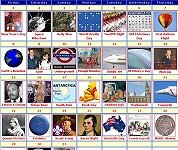
"I am and American citizen and astounded by your wonderful website! It is not only informative but kept so up to date that I constantly refer to it, especially the calendar. The pupils of your school are indeed lucky and the site reflects the dedication and enthusiasm of the staff and students. I hope the site continues for many years." Charles, USA, Atlanta "I was searching the web yesterday for a website that would give me a calendar of significant days and weeks throughout the year. I was really struggling until I came across your website and was instantly blown away. I know you have already received lots of praise for your efforts but your site is the most impressive schools website I have seen. Often the amount of time and effort put into creating such a resource is not matched by its usefulness. Your calendars in particular are second to none. Thank you and well done." David, Deputy Headteacher "EXCELLENT information of the customs and traditions of Great Britain........some of which are in danger of being lost or forgotten forever. THANKS for such an interesting site! " Karen "As a childminder I like to celebrate festivals and awareness days with the little ones. This was the best and most comprehensive list I found on the net." "Information about awareness days and special dates to help me plan my youth work programme." "I am British but now living in the US. I needed to know when Mothers' Day is in the UK. (In the USA it is always in May. In 2007 it is on May 13 this year. I didn't want my mother to think I had forgotten her - in March! Now she'll get two cards - one in March and one in May but she deserves to be applauded twice!" "Thank you for all the information i have found relating to feasts and festivals as a teacher it has given me an insite to the history i needed to teach to primary children" Julie, Northampton England "This is a fantastic website. I am a headteacher planning this terms assemblies and came accross your site through REonline. It is full of useful well presented information. I can use a lot of it in my assemblies and I will be recommending that my staff use it with children. We are an infant school but the way you present the information is so accessible that I feel we could use it. Thank you."
© Copyright 2013
is the creator of the Woodlands Resources section of the Woodlands Junior website. left Woodlands in 2003 to work in Kent schools as an ICT Consulatant. Woodlands Junior Homework Help new website |

customs traditions britain, scotland customs and traditions, traditional british christmas dinner, christmas customs traditions, christmas traditions, british culture customs traditions, british christmas customs, british christmas carols, british christmas crackers, british christmas pudding,british christmas trees, british christmas dinner, british celebrate christmas, british royal family, chrsitmas traditions, christmas customs, england, wales, scotland, Christmas Celebrations, british traditions, british customs, british culture, December, Christmas, food, christmas dinner, mince pies, advent, christmas eve, christmas day, boxing day, 12 days of christmas, new year, christmas pudding, christmas cake, christmas carols, christmas cards, christmas stocking, pantomime, santa claus, st nicholas, christmas presents, christmas crackers, christmas trees, mistletoe, holly, ivy