British Life and Culture by Mandy Barrow
Have you ever wondered how Britain is run? Who makes the rules, and how did we get to have a Prime Minister and Parliament? ‘Hispolitics’ is a fun way to think about the history of British politics – how the way Britain is governed has changed over hundreds of years. It’s a story of kings, queens, brave ideas, and people wanting their voices to be heard!
Long, long ago, Britain was ruled by powerful kings and queens. They made almost all the decisions themselves. If the King wanted something, it usually happened! But not everyone was happy with this.
One very important moment happened in 1215. King John was not a very popular king. Many powerful barons (like lords) were unhappy with him. They made him sign a special document called the Magna Carta. This was a really big deal because it said that even the King had to follow certain rules and couldn’t do absolutely everything he wanted. It was one of the first steps towards limiting the power of a ruler and saying that no one is above the law.
After the Magna Carta, the idea that a king shouldn’t have all the power slowly grew. Over time, a group of people started to meet to advise the King. This group eventually grew into what we now know as Parliament.
At first, Parliament didn’t have much power. It was mostly made up of rich landowners. But slowly, over hundreds of years, Parliament became more and more important. There were even times when Parliament and the King disagreed so much that it led to wars! Eventually, it became clear that Parliament would share power with the King or Queen, and sometimes even have more power.
Today, Parliament is where our laws are made and debated. It has two main parts: the House of Commons and the House of Lords. The House of Commons is where the people we vote for (Members of Parliament, or MPs) sit.
Imagine you and your friends want to decide what game to play. Some of you might want to play football, others might prefer hide-and-seek. In the same way, people have different ideas about how a country should be run. These different ideas led to the creation of political parties.
Political parties are groups of people who share similar ideas about how to make Britain a better place. They work together to try and get their members elected into Parliament. When a party wins the most seats in Parliament, their leader usually becomes the Prime Minister, and their party forms the government.
The idea of political parties has been around for a long time, with groups like the ‘Whigs’ and ‘Tories’ in the past, who were the ancestors of today’s parties.
For a very long time, only a few rich men were allowed to vote in elections. Most people, including all women, had no say in who ran the country. This wasn’t very fair!
Over the years, many people campaigned and fought for more people to have the right to vote. There were big changes called ‘Reform Acts’ which slowly gave more and more men the vote. A huge step happened in 1918 when some women over 30 were finally allowed to vote. Then, in 1928, almost all adults aged 21 and over could vote (this age was later changed to 18).
This journey, where more and more people get a say in how the country is run, is called the development of democracy. It means “rule by the people.”
Here are some important dates and events that show how British politics has changed over time:
| Year | Event | What it Meant for Britain |
|---|---|---|
| 1215 | Magna Carta signed | First time a King agreed to follow rules, limiting his power. |
| 1265 | First English Parliament | An early meeting where people were invited to advise the King. |
| 1689 | Bill of Rights | Made Parliament more powerful than the King, giving people more rights. |
| 1832 | Great Reform Act | More men, especially those who owned property, got the right to vote. |
| 1918 | Representation of the People Act | Some women over 30 and all men over 21 could vote for the first time. |
| 1928 | Equal Franchise Act | All men and women aged 21 and over could vote equally. (Later changed to 18 in 1969). |
Today, Britain is a parliamentary democracy. This means we vote for our MPs, and they go to Parliament to represent us and make laws. The King or Queen is still the Head of State, but the government, led by the Prime Minister, makes the important decisions.
Understanding ‘Hispolitics’ helps us see that the way Britain is run isn’t just how it’s always been. It’s the result of hundreds of years of changes, struggles, and the constant effort to make our country fairer and more representative of all its people.
Author: Mandy Barrow
|
Special Days in December
|
||||||||||||||||||||||||||||||||||||||||
Learn about Christmas in England from the children who live in Britain Christmas traditions why do what we do at chrsitmas time
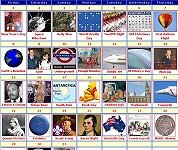
Information about my calendars
"I am and American citizen and astounded by your wonderful website! It is not only informative but kept so up to date that I constantly refer to it, especially the calendar. The pupils of your school are indeed lucky and the site reflects the dedication and enthusiasm of the staff and students. I hope the site continues for many years." Charles, USA, Atlanta "I was searching the web yesterday for a website that would give me a calendar of significant days and weeks throughout the year. I was really struggling until I came across your website and was instantly blown away. I know you have already received lots of praise for your efforts but your site is the most impressive schools website I have seen. Often the amount of time and effort put into creating such a resource is not matched by its usefulness. Your calendars in particular are second to none. Thank you and well done." David, Deputy Headteacher "EXCELLENT information of the customs and traditions of Great Britain........some of which are in danger of being lost or forgotten forever. THANKS for such an interesting site! " Karen "As a childminder I like to celebrate festivals and awareness days with the little ones. This was the best and most comprehensive list I found on the net." "Information about awareness days and special dates to help me plan my youth work programme." "I am British but now living in the US. I needed to know when Mothers' Day is in the UK. (In the USA it is always in May. In 2007 it is on May 13 this year. I didn't want my mother to think I had forgotten her - in March! Now she'll get two cards - one in March and one in May but she deserves to be applauded twice!" "Thank you for all the information i have found relating to feasts and festivals as a teacher it has given me an insite to the history i needed to teach to primary children" Julie, Northampton England "This is a fantastic website. I am a headteacher planning this terms assemblies and came accross your site through REonline. It is full of useful well presented information. I can use a lot of it in my assemblies and I will be recommending that my staff use it with children. We are an infant school but the way you present the information is so accessible that I feel we could use it. Thank you."
© Copyright 2013
is the creator of the Woodlands Resources section of the Woodlands Junior website. left Woodlands in 2003 to work in Kent schools as an ICT Consulatant. Woodlands Junior Homework Help new website |

customs traditions britain, scotland customs and traditions, traditional british christmas dinner, christmas customs traditions, christmas traditions, british culture customs traditions, british christmas customs, british christmas carols, british christmas crackers, british christmas pudding,british christmas trees, british christmas dinner, british celebrate christmas, british royal family, chrsitmas traditions, christmas customs, england, wales, scotland, Christmas Celebrations, british traditions, british customs, british culture, December, Christmas, food, christmas dinner, mince pies, advent, christmas eve, christmas day, boxing day, 12 days of christmas, new year, christmas pudding, christmas cake, christmas carols, christmas cards, christmas stocking, pantomime, santa claus, st nicholas, christmas presents, christmas crackers, christmas trees, mistletoe, holly, ivy