British Life and Culture by Mandy Barrow
Welcome back! On our last page, we learned about the legendary St George, the brave soldier who, according to stories, rescued a princess and slew a fearsome dragon. But St George is much more than just a character from a heroic tale. He is the patron saint of England, and his story and symbols are deeply woven into British culture and history, even today. Let’s explore how St George is remembered and celebrated, and what his famous flag means to us.
You’ve probably seen the Flag of St George many times, especially during sporting events or on important buildings. It’s one of the most recognisable flags in the world, yet it’s incredibly simple: a red cross on a white background. This design is known as a ‘George Cross’.
The red cross has been associated with St George since the Middle Ages. English crusaders, who were Christian knights fighting in the Holy Land, wore the St George’s Cross as an emblem to identify themselves. By the late 13th century, it was widely recognised as the national emblem of England. It was formally adopted as the national flag of England in the 16th century.
When the Kingdom of Great Britain was formed in 1707, the Flag of St George was combined with the Scottish Flag of St Andrew (a white saltire, or diagonal cross, on a blue background) to create the first Union Flag. Later, the Irish Flag of St Patrick (a red saltire on a white background) was added to create the modern Union Jack we see today. Even though it’s part of the Union Jack, the St George’s Cross remains the distinct flag of England.
St George’s Day is celebrated on 23rd April each year. This date is traditionally believed to be the day St George died in 303 AD. While many countries have grand celebrations for their national saints, St George’s Day in England is often a quieter affair compared to, say, St Patrick’s Day in Ireland or Burns Night in Scotland.
It is not a public holiday in England, which means schools and businesses remain open. However, there are often smaller events, parades, and celebrations across the country. People might fly the Flag of St George, wear a red rose (England’s national flower), or participate in traditional English activities. Some towns and cities host special events, medieval fairs, or dragon-themed fun days to mark the occasion.
In recent years, there has been a growing movement to encourage more widespread celebration of St George’s Day, to help people connect with English heritage and identity. Many people believe it’s important to recognise and celebrate England’s patron saint with as much enthusiasm as other nations show for theirs.
You might wonder why a saint who never actually set foot in England became its patron. St George was a popular figure throughout Europe during the Middle Ages, particularly among knights and soldiers, because of his reputation for bravery and chivalry. He was seen as a protector and a symbol of courage.
English kings, especially during the time of the Crusades, adopted St George as a symbol for their armies. King Edward III,
|
Special Days in December
|
||||||||||||||||||||||||||||||||||||||||
Learn about Christmas in England from the children who live in Britain Christmas traditions why do what we do at chrsitmas time
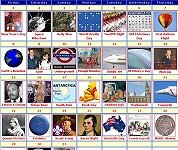
Information about my calendars
"I am and American citizen and astounded by your wonderful website! It is not only informative but kept so up to date that I constantly refer to it, especially the calendar. The pupils of your school are indeed lucky and the site reflects the dedication and enthusiasm of the staff and students. I hope the site continues for many years." Charles, USA, Atlanta "I was searching the web yesterday for a website that would give me a calendar of significant days and weeks throughout the year. I was really struggling until I came across your website and was instantly blown away. I know you have already received lots of praise for your efforts but your site is the most impressive schools website I have seen. Often the amount of time and effort put into creating such a resource is not matched by its usefulness. Your calendars in particular are second to none. Thank you and well done." David, Deputy Headteacher "EXCELLENT information of the customs and traditions of Great Britain........some of which are in danger of being lost or forgotten forever. THANKS for such an interesting site! " Karen "As a childminder I like to celebrate festivals and awareness days with the little ones. This was the best and most comprehensive list I found on the net." "Information about awareness days and special dates to help me plan my youth work programme." "I am British but now living in the US. I needed to know when Mothers' Day is in the UK. (In the USA it is always in May. In 2007 it is on May 13 this year. I didn't want my mother to think I had forgotten her - in March! Now she'll get two cards - one in March and one in May but she deserves to be applauded twice!" "Thank you for all the information i have found relating to feasts and festivals as a teacher it has given me an insite to the history i needed to teach to primary children" Julie, Northampton England "This is a fantastic website. I am a headteacher planning this terms assemblies and came accross your site through REonline. It is full of useful well presented information. I can use a lot of it in my assemblies and I will be recommending that my staff use it with children. We are an infant school but the way you present the information is so accessible that I feel we could use it. Thank you."
© Copyright 2013
is the creator of the Woodlands Resources section of the Woodlands Junior website. left Woodlands in 2003 to work in Kent schools as an ICT Consulatant. Woodlands Junior Homework Help new website |

customs traditions britain, scotland customs and traditions, traditional british christmas dinner, christmas customs traditions, christmas traditions, british culture customs traditions, british christmas customs, british christmas carols, british christmas crackers, british christmas pudding,british christmas trees, british christmas dinner, british celebrate christmas, british royal family, chrsitmas traditions, christmas customs, england, wales, scotland, Christmas Celebrations, british traditions, british customs, british culture, December, Christmas, food, christmas dinner, mince pies, advent, christmas eve, christmas day, boxing day, 12 days of christmas, new year, christmas pudding, christmas cake, christmas carols, christmas cards, christmas stocking, pantomime, santa claus, st nicholas, christmas presents, christmas crackers, christmas trees, mistletoe, holly, ivy