British Life and Culture by Mandy Barrow
Hello! My name is Mandy Barrow, and today we’re going to explore a very important and sometimes confusing period in English history: the War of the Roses. This wasn’t a war fought with actual flowers, but it was a long and bloody struggle for the throne of England that lasted for over 30 years! It ended with the beginning of a powerful new family, the Tudors.
Imagine two big, powerful families, both related to the King of England, but each believing they should be in charge. That’s pretty much what happened! The War of the Roses was a series of civil wars fought between two branches of the royal family, the Plantagenets. These were the House of Lancaster and the House of York.
The wars are called the ‘War of the Roses’ because each family had a rose as its emblem. The House of Lancaster used a red rose, and the House of York used a white rose. These roses became symbols of their fight for power.
Both the Lancastrians and the Yorkists were descendants of King Edward III, who had ruled England earlier. They were cousins, but they disagreed strongly about who had the best right to be king.
Here’s a quick look at the two houses:
| House | Symbol | Colour | Claim to Throne |
|---|---|---|---|
| Lancaster | Red Rose | Red | Descended from John of Gaunt, son of Edward III |
| York | White Rose | White | Descended from Lionel of Antwerp and Edmund of Langley, other sons of Edward III |
The main reason for the war was a weak king, Henry VI, who belonged to the House of Lancaster. Henry VI was sometimes ill and unable to rule properly. This meant that powerful nobles, especially Richard, Duke of York, saw a chance to take control. Richard believed that the Yorkist line had a stronger claim to the throne than Henry VI.
There was also a lot of unhappiness in England after the Hundred Years’ War with France, which England had lost. People were looking for strong leadership, and the instability at the top made many nobles choose sides and fight for their chosen king.
The war began in earnest in 1455. It wasn’t one continuous battle, but many battles and changes of power over the years. Kings were crowned, then overthrown, and sometimes even killed!
Many famous battles took place during this time, such as the Battle of Towton (one of the bloodiest battles ever fought on English soil) and the Battle of Tewkesbury.
The War of the Roses finally came to an end with one of the most famous battles in English history: the Battle of Bosworth Field in 1485. This battle was fought between the last Yorkist king, Richard III, and Henry Tudor. Henry Tudor was a distant relative of the Lancastrian family and had been living in exile.
At Bosworth Field, Richard III was defeated and killed, making him the last English king to die in battle. Henry Tudor won the battle and became King Henry VII. This was a huge turning point!
To bring peace and unite the warring families, Henry VII married Elizabeth of York, who was the daughter of the former Yorkist king, Edward IV. This marriage symbolised the joining of the red and white roses, creating a new emblem: the Tudor Rose. This clever move helped to heal the divisions and bring stability to England after decades of fighting.
The War of the Roses was a time of great upheaval and bloodshed, but it led to the end of the Plantagenet dynasty and the beginning of the powerful Tudor dynasty. The Tudors, starting with Henry VII, went on to rule England for over a hundred years, bringing a new era of strength and change to the country. Without the War of the Roses, England’s history would have been very different!
|
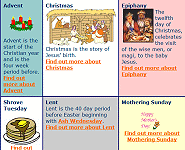
Special Days in December
|
||||||||||||||||||||||||||||||||||||||||
Learn about Christmas in England from the children who live in Britain Christmas traditions why do what we do at chrsitmas time
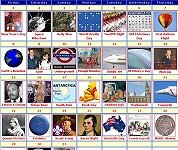
Information about my calendars
"I am and American citizen and astounded by your wonderful website! It is not only informative but kept so up to date that I constantly refer to it, especially the calendar. The pupils of your school are indeed lucky and the site reflects the dedication and enthusiasm of the staff and students. I hope the site continues for many years." Charles, USA, Atlanta "I was searching the web yesterday for a website that would give me a calendar of significant days and weeks throughout the year. I was really struggling until I came across your website and was instantly blown away. I know you have already received lots of praise for your efforts but your site is the most impressive schools website I have seen. Often the amount of time and effort put into creating such a resource is not matched by its usefulness. Your calendars in particular are second to none. Thank you and well done." David, Deputy Headteacher "EXCELLENT information of the customs and traditions of Great Britain........some of which are in danger of being lost or forgotten forever. THANKS for such an interesting site! " Karen "As a childminder I like to celebrate festivals and awareness days with the little ones. This was the best and most comprehensive list I found on the net." "Information about awareness days and special dates to help me plan my youth work programme." "I am British but now living in the US. I needed to know when Mothers' Day is in the UK. (In the USA it is always in May. In 2007 it is on May 13 this year. I didn't want my mother to think I had forgotten her - in March! Now she'll get two cards - one in March and one in May but she deserves to be applauded twice!" "Thank you for all the information i have found relating to feasts and festivals as a teacher it has given me an insite to the history i needed to teach to primary children" Julie, Northampton England "This is a fantastic website. I am a headteacher planning this terms assemblies and came accross your site through REonline. It is full of useful well presented information. I can use a lot of it in my assemblies and I will be recommending that my staff use it with children. We are an infant school but the way you present the information is so accessible that I feel we could use it. Thank you."
© Copyright 2013
is the creator of the Woodlands Resources section of the Woodlands Junior website. left Woodlands in 2003 to work in Kent schools as an ICT Consulatant. Woodlands Junior Homework Help new website |

customs traditions britain, scotland customs and traditions, traditional british christmas dinner, christmas customs traditions, christmas traditions, british culture customs traditions, british christmas customs, british christmas carols, british christmas crackers, british christmas pudding,british christmas trees, british christmas dinner, british celebrate christmas, british royal family, chrsitmas traditions, christmas customs, england, wales, scotland, Christmas Celebrations, british traditions, british customs, british culture, December, Christmas, food, christmas dinner, mince pies, advent, christmas eve, christmas day, boxing day, 12 days of christmas, new year, christmas pudding, christmas cake, christmas carols, christmas cards, christmas stocking, pantomime, santa claus, st nicholas, christmas presents, christmas crackers, christmas trees, mistletoe, holly, ivy